
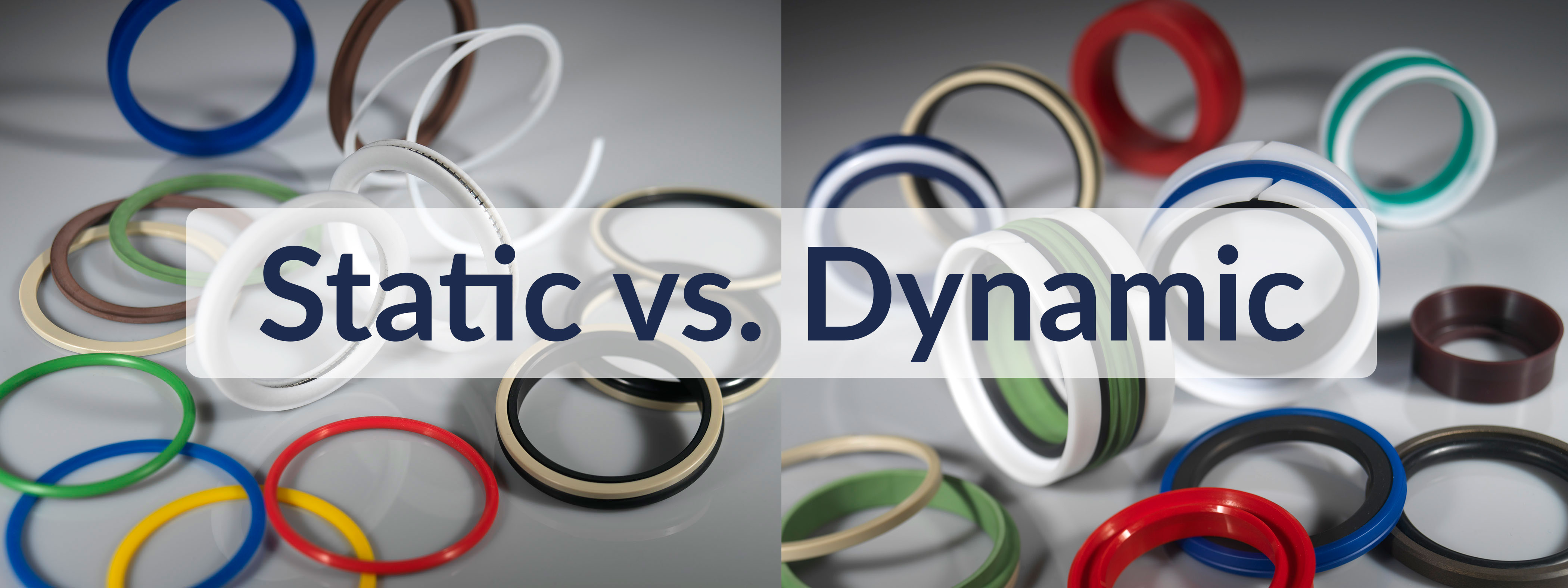
Static vs. Dynamic Seals: What’s the Difference?
Published 29 September 2025
When selecting seals for industrial applications, a key consideration is the type of surfaces the seal will come into contact with, which determines whether a static or dynamic seal is required. Although both are designed to prevent the leakage of fluids or gases, they differ considerably in terms of design, material selection and performance requirements. Knowing these distinctions is essential for choosing the right seal for your specific application.
WHAT IS A STATIC SEAL?
A static seal is used when there is no relative motion between the sealing surfaces. Once the seal is compressed between two components, it stays in place and does not experience continuous movement.
Examples of Static Seals
Design Considerations
- Compression is the key factor. The seal must deform enough to fill all gaps and irregularities between surfaces.
- Material hardness is selected based on the required squeeze and potential extrusion risks.
- Surface finish of the mating hardware is critical; too rough and leakage may occur, too smooth and the seal may not grip effectively.
Advantages of Static Seals
- Simple installation
- Long service life (since no movement reduces wear)
- Cost-effective solution for many applications
WHAT IS A DYNAMIC SEAL?
A dynamic seal operates where there is relative motion between the sealing surfaces. These seals are exposed to constant friction, wear and sometimes extreme conditions such as pressure cycling or high shaft speeds.
Examples of Dynamic Seals
Types of Dynamic Motion
- Reciprocating – back-and-forth motion (e.g. hydraulic cylinders)
- Rotary – continuous circular motion (e.g. pump shafts)
- Oscillating – limited rotational motion (e.g. swivel joints)
Design Considerations
- Friction & Wear: Materials must withstand sliding contact without rapid degradation.
- Lubrication: Many dynamic seals rely on a thin fluid film to minimise wear.
- Temperature & Pressure: Heat generated by friction can lead to premature failure if not managed properly.
- Seal Type/Design: Specialised profiles (e.g. lip seals, U-cups, V-rings) are designed to balance sealing force with reduced drag.
Advantages of Dynamic Seals
- Capable of sealing in high-pressure, high-motion environments
- Engineered designs provide optimised performance for specific motion types
- Can extend equipment life when correctly specified
Key Differences Between Static and Dynamic Seals
Factor Static Seals Dynamic Seals Relative Motion None Reciprocating, rotary or oscillating Primary Stress Compression Friction, wear, heat Common Forms O-rings, gaskets Lip seals, U-cups, V-rings, rod/piston seals Service Life Long (minimal wear) Shorter, depends on motion & conditions Design Focus Material squeeze & surface finish Friction management, lubrication, design/shape Choosing the Right Seal
Selecting the correct sealing solution requires a thorough understanding of the operating environment, which can be determined by a series of questions:
Will the components move relative to one another?
If the answer is yes, you know you need a dynamic seal.What pressures, temperatures and chemicals will the seal encounter?
The answers to this determine the best material for the seal(s). If in doubt, speak to a sealing solutions expect for advice.Is low friction or long-term stability more important?
The choice of seal design and material is based on the needs of each application.The wrong choice of seal can result in leakage, premature wear, equipment downtime or even equipment failure. That is why it is essential to consult with seal experts to ensure the correct considerations are made.
In summary…
While the difference between static and dynamic seals may sound straightforward, the engineering that goes into each type is anything but simple. Static seals rely on compression and material compatibility, while dynamic seals must be designed to handle continuous motion, friction, and wear.
By understanding these fundamental differences, engineers and maintenance teams can make more informed decisions, ensuring reliable performance, reduced downtime, and extended life of critical equipment.