
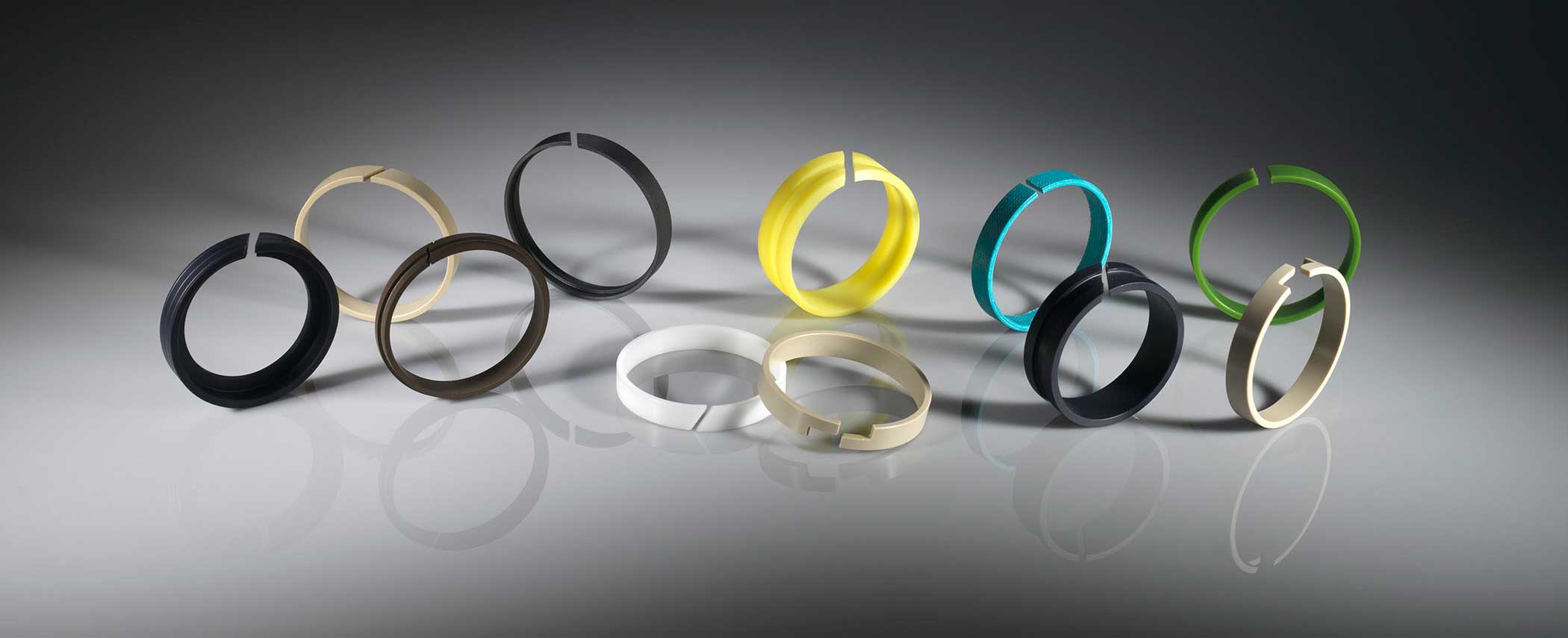
Wear Rings / Guide Rings
What are Wear Rings?
Wear rings, also known as guide rings, are bearing elements used in hydraulic cylinders to guide the piston and rod, preventing metal-to-metal contact between moving components. By absorbing side loads and maintaining alignment, wear rings help extend seal life, reduce friction and protect hydraulic equipment from premature wear.
M Seals supplies both piston wear rings and rod wear rings for hydraulic cylinders, helping to maintain alignment, absorb side loads and protect sealing systems from premature wear.
M Seals manufactures and supplies wear rings for OEMs, hydraulic equipment builders and maintenance engineers across a wide range of industrial applications.
Our technical team assists customers with wear ring material selection based on operating pressure, speed, temperature and fluid compatibility.
Wear Rings at a Glance
FEATURE
DETAILS Product Type Wear Rings / Guide Rings Applications Hydraulic Cylinders Function Prevent metal-to-metal contact Materials PTFE, PEEK, Nylon, Polyacetal, Polyester Fabric Max. Pressure No limitation stated Temperature Range -40°C to 130°C Wear Ring Materials and Selection
Selecting the correct wear ring material is essential to maximise hydraulic cylinder performance, minimise friction and extend service life. The ideal material depends on several factors, including operating pressure, side loading, speed, temperature, lubrication conditions and the hydraulic fluid being used.
M Seals manufactures wear rings and guide rings from a range of high-performance materials, including lubricated polyester fabric laminate, reinforced polyacetal, lubricated nylon, PTFE, PEEK and polyimide. Each material offers specific advantages for different operating environments.
For general hydraulic applications, reinforced polyacetal and lubricated nylon provide an excellent balance of strength, wear resistance and cost-effectiveness. Where low friction and smooth operation are priorities, PTFE-based wear rings offer outstanding sliding characteristics and help reduce break-out forces. For demanding applications involving high loads, elevated temperatures or aggressive operating conditions, advanced materials such as PEEK and polyimide deliver exceptional mechanical strength and durability.
When selecting a wear ring, it is important to consider:
- Operating temperature range
- Radial loads and side loading forces
- Hydraulic fluid compatibility
- Speed of operation
- Friction requirements
- Equipment duty cycle and service life expectations
Our technical team can help identify the most suitable wear ring material for your application, ensuring reliable guidance of the piston or rod while preventing metal-to-metal contact and premature seal wear. Whether for OEM equipment or maintenance and repair projects, we can recommend a solution tailored to your operating conditions.
Request a Quote
Operating Conditions
Our wear rings are particularly suitable for replacing traditional soft metal bearings, as the low friction benefits enable them to operate effectively in conditions of minimal lubrication. The wear rings are recommended to be used in the following conditions:
- Temperature: -40°C to +130°C
- Fluids: mineral based fluids, water/glycol, water emulsions, phosphate esters (non-flammable)
- Fluid pressure: no limitation
- Radial load: in normal lubricated conditions and speeds up to 30m/min, the maximum radial load can be calculated from the formula:
P= D x E x Ps
P
(Kg)
Max radial load
D
(cm)
Ring diameter subject to dynamic movement
E
(cm)
Ring axial width
Ps
(Bar)
370 Bar (ASTM D.695) maximum permissible loading for material.
Surface FinishTo ensure long life of the wear rings, the surface finishes must not exceed those indicated for the seal being used.
Assembly
Due to wear rings being split, they may naturally spring out of round. To avoid potential damage during assembly, recommended lead-in chamfers should be incorporated in the end of the cylinder bore or rod ends. Details of lead-in chamfers are given for specific seals in our catalogue, or can be obtained from our technical team.
No special assembly instructions are necessary, although lubrication is desirable and attention to cleanliness is important.
Industries & Applications for Hydraulic Wear Rings
Applications include:
- Mobile hydraulics
- Construction equipment
- Agricultural machinery
- Material handling equipment
- Industrial hydraulic presses
- Marine hydraulic systems
- Mining equipment
Buy Wear Rings/Guide RingsWe manufacture and supply standard and custom wear rings for hydraulic cylinder applications. Available in a range of sizes and materials, our wear rings can be selected to suit demanding OEM and maintenance requirements.
Request a quote using the form above or via our contact page. We have a number of items in stock for next day delivery and we will get back to you as quickly as we can.
Wear Rings Frequently Asked Questions
What is a wear ring?
A wear ring is a bearing component that prevents metal-to-metal contact between hydraulic cylinder components.
What are wear rings used for?
Wear rings are used in hydraulic cylinders to guide the piston and rod, absorb side loads, prevent metal-to-metal contact and protect seals and cylinder components from premature wear.
Why are wear rings important?
Wear rings help reduce wear on cylinder components, extend seal life, minimise friction and improve the overall reliability of hydraulic systems.
How do wear rings work?
Wear rings guide the piston or rod within a hydraulic cylinder, preventing metal-to-metal contact and helping to distribute side loads evenly.
What materials are wear rings made from?
Wear rings can be manufactured from polyester fabric laminate, reinforced polyacetal, nylon, PTFE, PEEK and polyimide.
How do I select the correct wear ring material?
The ideal material depends on operating pressure, load, speed, temperature, fluid compatibility and the demands of the application.
What material is best for high-load hydraulic applications?
High-load applications often benefit from advanced materials such as PEEK or polyimide, which offer excellent strength, wear resistance and durability under demanding operating conditions.
What causes wear ring failure?
Wear ring failure can result from excessive side loading, contamination, poor lubrication, incorrect material selection or normal wear over time.
When should a wear ring be replaced?
Signs include excessive wear, increased side loading, seal failure or scoring within the cylinder.
What is the difference between a wear ring and a guide ring?
There is no functional difference. The terms "wear ring" and "guide ring" are commonly used interchangeably to describe bearings that guide the piston or rod and prevent metal-to-metal contact within a hydraulic cylinder.