
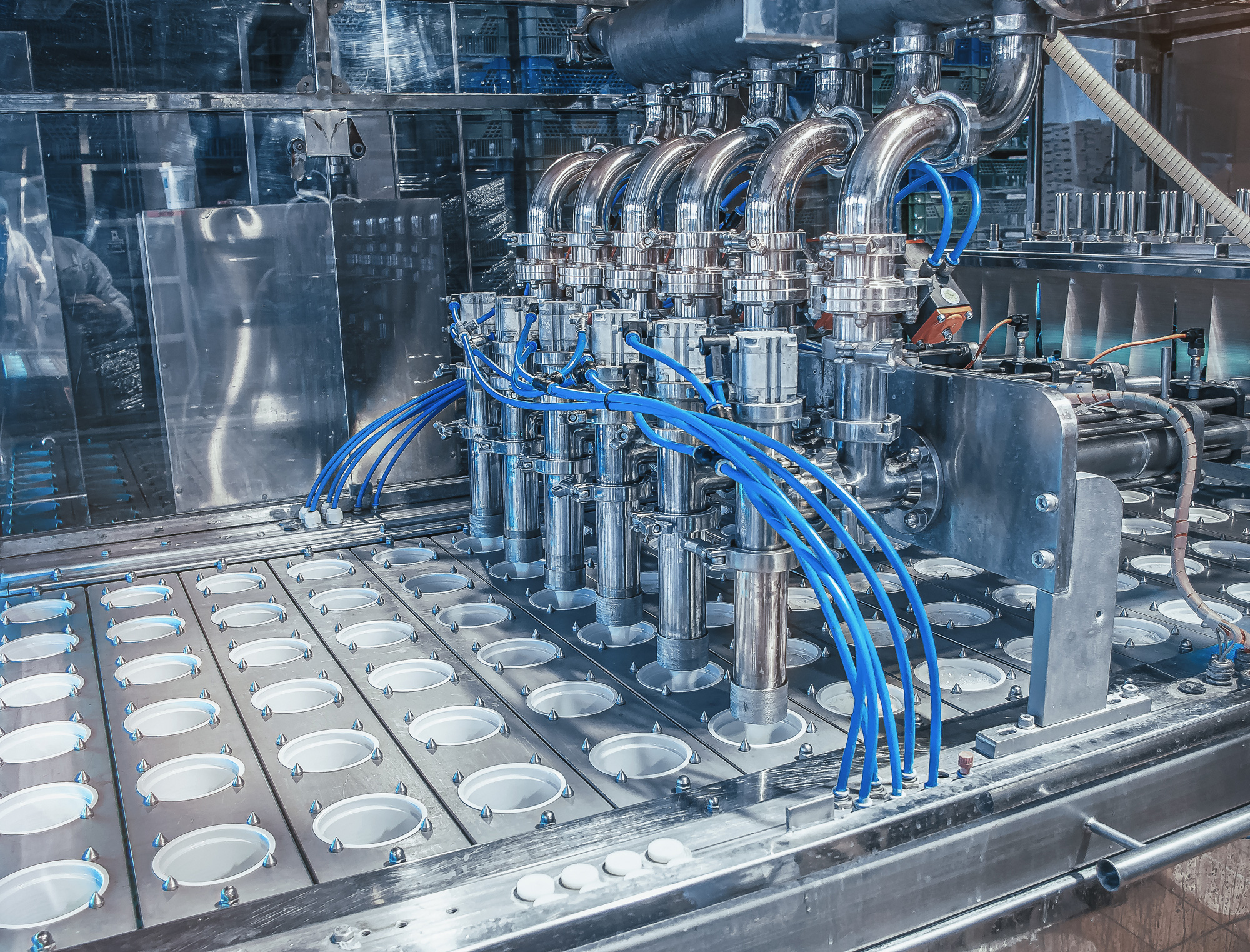
Food‑Grade Seals: Non-negotiable Hygiene & Safety
When we think about food production safety, our minds typically turn to hygiene protocols, contamination controls and quality testing. Yet behind the scenes, some of the smallest components have the biggest impact. Food‑grade seals play a critical role in keeping products safe, consistent, and compliant throughout the production process.
From dairy pasteurisers and beverage fillers to pharmaceutical‑grade mixers, seals are fundamental to maintaining product integrity. Their failure is more than an inconvenience – it can result in contamination, regulatory non‑compliance, costly downtime and lasting reputational damage.
Why Hygiene Matters
Contamination in food production can have serious consequences, ranging from product recalls to health risks for consumers. Seals, if not properly designed or maintained, can become hidden points of contamination where bacteria, mould or residue accumulate.
Food-grade seals are engineered to minimise these risks by:
- Resisting microbial growth
- Preventing leakage and ingress of contaminants
- Withstanding frequent sanitation cycles
- Maintaining integrity under extreme conditions
Their smooth, non-porous surfaces help ensure that cleaning processes are effective and thorough.
What are Food‑Grade Seals?
Food‑grade seals are elastomeric or polymer components designed to prevent leaks, block contaminants and withstand harsh processing conditions in environments where they may come into direct or indirect contact with food or consumable products.
Unlike general industrial seals, food‑grade seals must meet additional criteria beyond mechanical performance:
- Non‑toxic and non‑reactive
- Resistant to food ingredients, including fats, acids, sugars, alcohols and cleaning chemicals
- Compliant with food safety regulations
- Durable under temperature extremes and repeated washdown
Common seals used in the food and beverage industry are O‑rings, gaskets, lip seals, mechanical seals, diaphragm seals, PTFE seals and custom moulded components.
They are commonly used in equipment such as mixers, pumps, valves and packaging machinery.
Regulatory Compliance
Food‑grade sealing materials must comply with international and regional regulations, depending on where the equipment is manufactured and used.
Common standards include:
- FDA 21 CFR (USA) – Covers materials safe for food contact
- EU Regulation EC 1935/2004 – Ensures materials do not transfer harmful substances to food
- EU 10/2011 – Specific requirements for plastics in food contact
- 3‑A Sanitary Standards – Widely used in dairy and beverage processing
- NSF / USP Class VI – Often required for high‑purity or hygienic environments
Compliance isn’t just about initial certification. Traceability, compound consistency, and change control are essential.
Material Selection: Essential to Seal Performance
Choosing the correct sealing material is often the difference between years of reliable service and premature failure. Each food‑grade elastomer has distinct mechanical and chemical properties.
Common Food‑Grade Materials
EPDM (Ethylene Propylene Diene Monomer)
- Excellent resistance to hot water, steam and CIP/SIP cleaning
- Poor resistance to oils and fats
- Common in dairies and breweries
Silicone Rubber
- Wide temperature range and excellent flexibility
- Tasteless, odourless and inert
- Lower abrasion resistance – may not suit dynamic sealing
FKM (Viton®)
- Good resistance to oils, fats and cleaning chemicals
- Handles high temperatures well
- Certified food‑grade variants required
PTFE (Polytetrafluoroethylene)
- Exceptional chemical resistance and hygiene
- Low friction and non‑stick properties
- Often used with spring‑energised designs to overcome low elasticity
Selecting materials without fully considering the media, temperature cycles, pressure and mechanical movement can lead to rapid degradation, even if the seal is technically ‘food‑safe’.
Hygiene by Design
Modern food processing places heavy emphasis on hygienic design, and seals are a critical part of that philosophy.
Key design considerations include:
- No crevices or voids where bacteria can accumulate
- Smooth surfaces compatible with high‑pressure washdown
- Resistance to biofilm formation
- Colour coding (e.g. blue seals) for visual detection during inspection or X‑ray scanning
Failure to address these factors can undermine even the most robust HACCP plan.
CIP, SIP and the Challenge of Cleaning Cycles
Clean‑in‑Place (CIP) and Sterilise‑in‑Place (SIP) systems expose seals to repeated thermal shock, aggressive chemicals and mechanical stress.
A seal that performs perfectly during production may degrade rapidly under cleaning conditions. Common failure modes include:
- Compression set leading to leakage
- Chemical attack from caustic or acidic agents
- Thermal hardening or cracking
Design engineers increasingly specify seals based on cleaning conditions, as well as the processing environment, a shift driven by the realities of modern food safety audits.
The Cost of Seal Failure
Although seals are inexpensive components, their failure is rarely cheap.
Typical consequences include:
- Unplanned production stoppages
- Product recalls or wasted batches
- Microbial contamination risks
- Failed audits or regulatory action
In high‑volume food or beverage production, a seal costing a few pounds can be responsible for tens of thousands in downtime if it fails unexpectedly.
Emerging Trends in Food‑Grade Sealing
Innovation in sealing technology continues to keep pace with the food industry’s evolving demands:
- Detectable compounds compatible with metal detection systems
- Low‑migration materials for sensitive applications
- Advanced PTFE blends with improved resilience
- Lifecycle‑based seal engineering, focusing on predictive maintenance rather than reactive replacement
Increasing collaboration between seal manufacturers, OEMs and end users is helping shift sealing from a consumable afterthought to a strategic engineering choice.
In Summary…
Seals may operate quietly in the background, but their impact on safety, efficiency, and compliance is critical. In an industry where consumer trust is paramount and margins are tight, investing time in proper seal selection, validation and maintenance pays dividends.
As food and beverage processing becomes faster, cleaner and more automated, sealing solutions must evolve alongside it, because sometimes, the smallest components carry the biggest responsibility.
Visit our Food & Beverage page for more information on our sealing solutions for the industry.