
Custom vs. Standard Seals: Which Is Right for Your Application?
Choosing the right seal is one of the most important decisions when designing or maintaining industrial equipment. The wrong choice can lead to leaks, unplanned downtime, product contamination, increased maintenance costs and reduced equipment life.
One of the most common questions engineers and maintenance teams ask is whether a standard seal is sufficient or if a custom-engineered sealing solution is required. While standard seals are ideal for many applications, custom seals can offer significant performance and cost benefits when operating conditions become more demanding.
What Are Standard Seals?
Standard seals are manufactured to internationally recognised dimensions and specifications, making them readily available for a wide range of equipment and industries.
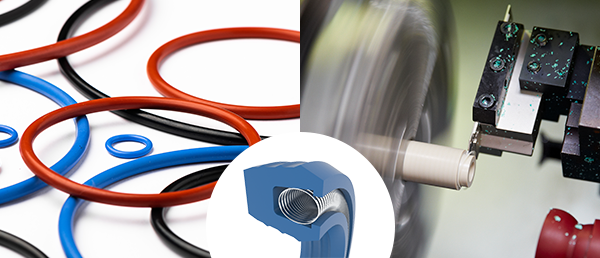
Common examples include O-rings, rod seals, piston seals, rotary shaft seals, hydraulic seals, wiper seals, V-rings and static seals.
Because these seals follow standard sizes, they are widely stocked and are often available for next-day delivery.
Benefits of Standard Seals
For many applications, standard seals provide excellent performance while keeping costs low.
Advantages include:
-- Immediate availability
-- Lower purchase costs
-- Proven, industry-tested designs
-- Easy replacement during maintenance
-- Suitable for the majority of standard hydraulic and pneumatic equipment
If your application operates within normal pressure, temperature and chemical exposure limits, a standard seal is often the most practical solution.
When Standard Seals May Not Be Enough
Although standard seals work well in many situations, they have limitations in certain environments and applications, for example:
-- Extreme temperatures
-- Very high pressures
-- Aggressive chemicals
-- Abrasive media
-- High rotational speeds
-- Vacuum applications
-- Unusual groove dimensions
-- Space restrictions
-- Excessive wear or premature seal failure
In these cases, continually replacing standard seals can become expensive due to increased downtime, maintenance and lost production.
This is where a custom sealing solution can deliver long-term value.
What Are Custom Seals?
Custom seals are engineered specifically for a customer's application. Rather than adapting equipment to suit an off-the-shelf seal, the seal is designed around the operating conditions and equipment requirements.
A bespoke seal may include:
-- Custom dimensions
-- Special lip profiles
-- Optimised sealing geometry
-- Advanced material selection
-- Spring-energised designs
-- Composite material combinations
-- Enhanced wear resistance
Every aspect is designed to maximise sealing performance and service life.
When Should You Choose a Custom Seal?
There are several situations where investing in a custom seal makes commercial and technical sense.
- Extreme Operating Conditions
Applications involving high pressure, extreme temperatures or aggressive chemicals often exceed the capabilities of standard sealing materials.
Custom seals can be manufactured from specialist materials including PTFE, PEEK, PEKK, FFKM, high-performance polyurethane, filled PTFE compounds and FDA or USP-compliant materials where required.
Selecting the correct material is often the difference between a seal lasting weeks or lasting years.
- Existing Seals Keep Failing
Repeated seal failures usually indicate that the seal is not suited to the operating environment.
Rather than continually replacing the same component, engineers should investigate:
-- Incorrect material selection
-- Excessive friction
-- Pressure spikes
-- Installation issues
-- Shaft or rod surface finish
-- Groove design
A redesigned custom seal can eliminate the root cause rather than simply treating the symptom.
- Equipment Has Non-Standard Dimensions
Older machinery, imported equipment or specialist OEM machinery often uses sealing grooves that do not match standard industry sizes.
A custom-manufactured seal allows the original equipment to continue operating without expensive modifications.
- Downtime Is Extremely Costly
For most industries, even a few hours of downtime can cost thousands of pounds.
Although a custom seal may have a higher initial purchase price, extending service intervals and preventing failures often results in a significantly lower total cost.
- Regulatory Compliance Is Essential
Some industries require seals manufactured from approved materials that comply with specific regulations or standards. For example, FDA, WRAS, USP, Food contact regulations and NORSOK requirements.
A custom sealing solution ensures both performance and compliance are considered from the outset.
Can Custom Seals Save Money?
One common misconception is that custom seals are always more expensive.
While the unit cost may be higher, the overall operating costs are often much lower.
A custom seal may reduce:
-- Equipment downtime
-- Maintenance labour
-- Fluid loss
-- Product contamination
-- Replacement frequency
When the cost of production stoppages is considered, investing in a custom-engineered seal can provide an excellent return on investment.
The Importance of Engineering Support
Selecting the correct seal involves far more than choosing a size.
Factors such as pressure, speed, media, temperature, surface finish, hardware tolerances and installation methods all influence sealing performance.
Working with an experienced sealing partner allows potential issues to be identified before they become costly failures.
Technical support may include:
-- Material selection
-- Seal design recommendations
-- Reverse engineering existing seals
-- Prototype manufacture
-- Performance testing
-- Rapid production for urgent requirements
This collaborative approach helps ensure the final solution delivers long-term reliability.
Summary
There is no one-size-fits-all answer when deciding between standard and custom seals.
For many applications, standard seals provide an economical and reliable solution with immediate availability. However, when operating conditions become more demanding, equipment is unique, or seal failures become frequent, a custom-engineered seal can dramatically improve reliability, reduce maintenance costs and extend equipment life.
If you're unsure which option is best for your application, speaking to a sealing specialist can help you make the right choice. At M Seals, we supply both standard sealing products and fully engineered custom sealing solutions for customers across a wide range of industries.
With thousands of standard seals available from stock for rapid delivery and in-house engineering and manufacturing capabilities, we can support everything from routine maintenance to complex, high-performance sealing challenges.
Whether you require a replacement O-Ring, a specialist PTFE seal, or a completely bespoke design manufactured from one of more than 240 material grades, our engineering team works closely with customers to identify the most effective and cost-efficient solution.