CASE STUDY
Improving Seal Performance in a HVAC Application
A customer operating a HVAC system was experiencing repeated failure of an elastomeric O-ring used within a reciprocating piston assembly. Despite the application not being considered particularly arduous in terms of pressure or temperature, the seal was consistently degrading in service. The O-ring was exhibiting signs of thermal damage and ultimately leakage, leading to reduced system efficiency and increased maintenance intervals.
The customer required a sealing solution capable of maintaining integrity over prolonged operational cycles while minimising the need for frequent replacement.
Assessment
A detailed review of the application parameters revealed that the piston operated at a relatively high stroke frequency. Although the load per cycle was moderate, the cumulative effect of rapid reciprocating motion resulted in significant localised frictional heat generation at the sealing interface.
Due to the small cross-sectional size of the seal (less than 6 mm), heat dissipation was limited, causing temperature build-up in the sealing lip. This resulted in thermal softening and eventual melting of the elastomer, leading to leakage and premature failure.
The root cause was therefore identified as friction-induced thermal degradation.
Solution
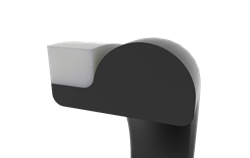
We recommended replacing the O-ring with a custom-engineered low interference single-acting T-seal. This design provided several performance advantages:
- Reduced contact area and optimised sealing geometry to lower frictional forces
- Improved dynamic sealing efficiency under reciprocating motion
- Greater resistance to deformation under cyclical loading
However, due to the extremely small seal size, installation presented a practical challenge. Standard material hardness made fitment difficult and increased the risk of installation damage.
To overcome this, we collaborated with our material supplier to develop a super-soft lubricated polyurethane compound. This bespoke material offered:
- Lower installation force requirements
- Improved conformity to sealing surfaces
- Reduced coefficient of friction during operation
- Enhanced resistance to heat build-up
- Extended operational life in high-frequency applications
The lubricated polyurethane formulation also provided inherent self-lubricating characteristics, further reducing frictional energy within the system.
Outcome
The custom T-seal solution significantly improved reliability within the HVAC system, reducing frictional heat generation and therefore preventing thermal degradation.
Following implementation, the customer reported:
- Elimination of seal burn-out issues
- Improved sealing performance
- Increased service life
- Reduced maintenance downtime
Even in applications that may initially appear to be low demand, it is important to analyse dynamic operating conditions such as stroke frequency and frictional energy when specifying sealing solutions.